
The Best Snowboard Boots to Buy in 2026: Fit-First Top Picks
As an Amazon Associate I earn from qualifying purchases. Some links may earn us a commission at no extra cost to you.
A “best” snowboard boot is really the best fit + flex for your riding. I focused on boots that are widely available in the US, have clear spec sheets, and cover the most common use-cases (all-mountain, park, hard-charging, wide feet, value).
Top picks
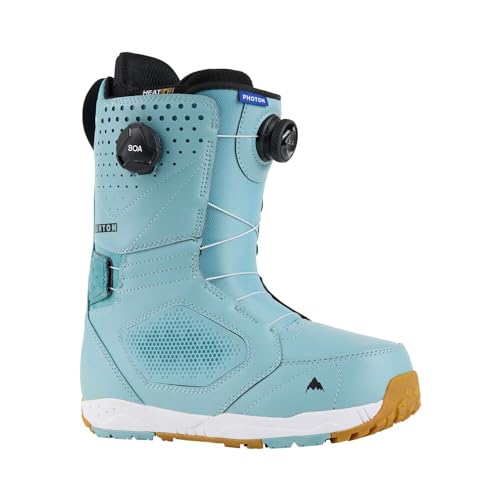
Burton Photon BOA — Best for responsive all-mountain control
If you want a more supportive, “charge-y” feel without going full race-boot stiff, Photon BOA is a strong default. Why it wins: dual-zone BOA adjustability + performance-focused build.
Pros
-
Dual-zone BOA lets me tune upper vs lower tightness
-
Performance liner and supportive cuff design
-
Grippy outsole spec (Vibram listed for traction)
Cons
-
“Medium-stiff” can feel punishing for newer riders
-
BOA parts are great—still something to maintain/replace over time
-
Not the loosest “surfy” boot for jib-heavy park laps
Social proof: See reviews on Amazon.
Trade-offs / who should skip: I’d skip this if you’re a true beginner or you know you prefer a soft, tweakable freestyle boot. Also skip if you hate the idea of any dial system (laces are simpler to field-fix).
Scores: Performance 4.5/5 • Flex/Response match 4.5/5 • Ease of use 4.5/5 • Value 4/5
ThirtyTwo TM-2 Double BOA — Best for hard-charging support with tunable fit
TM-2 Double BOA is a classic “do-it-all but aggressive” boot: supportive construction, dual BOA, and traction-focused outsole. Why it wins: locked-in heel hold + stiff-leaning support that still feels versatile.
No products found.
Pros
-
Dual BOA closure for upper/lower tuning
-
Michelin Fiberlite outsole called out for traction
-
Support features like articulated cuff / backstay listed
Cons
-
Stiffer feel isn’t ideal for buttery park style (unless that’s your preference)
-
Fit is “performance” oriented—can feel snug until heat-molded
-
Not the lightest-feeling option for people who want ultra-minimal boots
Social proof: See reviews on Amazon.
Trade-offs / who should skip: I’d skip if you want a soft boot for presses and tweaks, or if you’re very sensitive to pressure points and prefer simpler, softer liners.
Scores: Performance 4.5/5 • Flex/Response match 4.5/5 • Ease of use 4.5/5 • Value 4/5
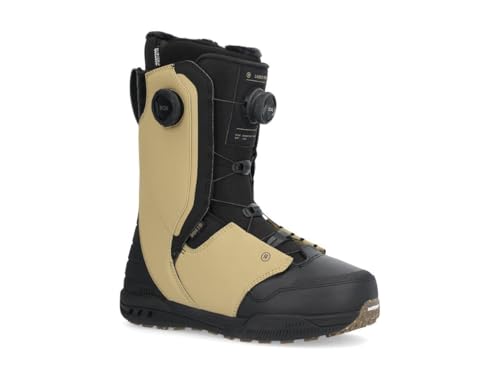
Ride Lasso Pro Wide — Best for wide feet that still want response
If normal boots crush your forefoot, this is the pick I’d look at first. Why it wins: wide last + aggressive, locked-in feel without giving up traction/cushioning features.
Pros
-
“Wide last” is explicitly listed (not just “roomy”)
-
Intuition Dream Liner + Tongue Tied Hybrid Harness called out for foot lock-down
-
Michelin outsole + Eco +Slime midsole listed for traction/cushioning
Cons
-
Aggressive feel (8/10 “Feel” listed) can be overkill for mellow cruising
-
If you don’t need wide, the extra volume can reduce precision
-
Premium features can be wasted if you ride only a few days a season
Social proof: See reviews on Amazon.
Trade-offs / who should skip: I’d skip if you have narrow heels/low-volume feet (unless you’re ready to work with footbeds/socks/fit tweaks). Also skip if you want a soft freestyle boot.
Scores: Performance 4.5/5 • Flex/Response match 4.5/5 • Ease of use 4/5 • Value 4/5
Burton Ruler BOA — Best value for most riders
Ruler BOA is a “buy it once and ride everything” boot for a lot of people—especially if you want BOA convenience without going top-shelf. Why it wins: balanced flex + dual-zone BOA + heat-moldable liner spec.
No products found.
Pros
-
Dual-zone BOA adjustment (upper/lower zones)
-
Imprint 2 heat-moldable liner + 3M Thinsulate listed by retailers
-
Good “one-boot quiver” flex profile for progressing riders
Cons
-
Not as supportive as true stiff “charger” boots
-
Not as buttery/soft as a park-specific lace boot
-
If your heel lifts easily, you may need a better footbed or different last
Social proof: See reviews on Amazon.
Trade-offs / who should skip: I’d skip if you already know you want very stiff response for high-speed freeride, or very soft flex for park/jibs.
Scores: Performance 4/5 • Flex/Response match 4/5 • Ease of use 4.5/5 • Value 4.5/5
Vans Hi-Standard OG — Best for park/freestyle feel on traditional laces
If you like the feel of laces and want a more forgiving freestyle-friendly flex, Hi-Standard OG is a staple. Why it wins: traditional laces + mid flex + impact-focused footbed spec.
No products found.
Pros
-
Flex rating 4–5 listed (soft-to-mid, park-friendly)
-
V1 UltraCush liner + heat-moldable core called out for customized fit
-
V1 PopCush footbed with 3D shaping for impact protection
Cons
-
Laces take longer to dial in than BOA
-
Softer feel isn’t ideal for aggressive, high-speed carving
-
If you want max heel lock, you may prefer stiffer boots/harness systems
Social proof: See reviews on Amazon.
Trade-offs / who should skip: I’d skip if you’re heavy, ride very fast, or demand a super supportive boot for steep freeride lines—this is more about tweakability and comfort.
Scores: Performance 4/5 • Flex/Response match 4/5 • Ease of use 3.5/5 • Value 4/5
Quick compare
-
Most responsive all-mountain: Burton Photon BOA
-
Aggressive support + dual BOA: ThirtyTwo TM-2 Double BOA
-
Best wide-fit performance pick: Ride Lasso Pro Wide
-
Best value “do most things” boot: Burton Ruler BOA
-
Best lace freestyle feel: Vans Hi-Standard OG
FAQs
Are more expensive snowboard boots always better?
No—fit is king. Pricier boots often add nicer liners, better harness systems, and traction-focused soles, but the wrong last/volume will still ride poorly.
Should I buy a soft or stiff boot?
If you’re learning and riding park, softer-to-mid flex is usually easier to control (Hi-Standard OG flex 4–5). If you ride faster, steeper terrain and want precision, go medium-stiff/stiff (Photon described as “medium-stiff”; Lasso Pro “aggressive” feel).
Is BOA worth it vs laces?
If you like quick, repeatable micro-adjustments, yes. If you want maximum simplicity and easy field repair, laces still win (and they feel more “natural” to many freestyle riders).
What if I’m between sizes?
Boot sizing is brand-specific. I’d start with your measured mondo/Brannock equivalent and use the brand size chart, then prioritize the correct heel hold over extra toe room (liners pack out). If you’re truly between, consider the brand’s heat-moldable liner options.
Do I need “wide” boots?
If your forefoot goes numb, you get hot spots, or you constantly size up to survive a day, a wide last can be a game-changer (Lasso Pro Wide explicitly lists a wide last).
As an Amazon Associate, I earn from qualifying purchases.