
Best water filters for cleaner-tasting tap water (2026)
As an Amazon Associate I earn from qualifying purchases. Some links may earn us a commission at no extra cost to you.
If you want a “best water filter” that actually matches your life, start with how you’ll use it (pitcher vs faucet vs under-sink vs RO). I focused on filters with verifiable third-party certifications and practical ownership costs (filter life, flow, install hassle).
Top picks
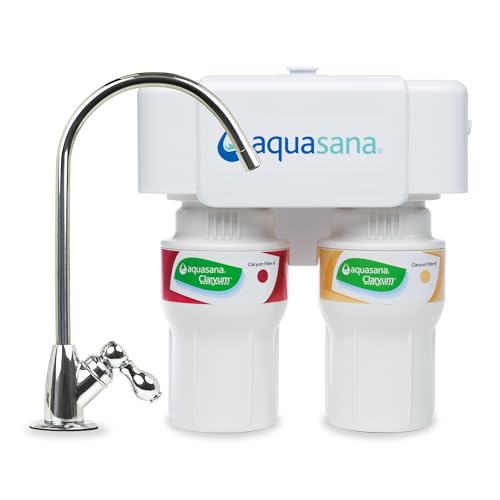
Aquasana AQ-5200 — Best for most kitchens (under-sink, high-certification)
A strong “set it and forget it” option with a dedicated filtered-water faucet and solid verified certifications.
Why it wins: Great balance of certification breadth + decent flow for everyday drinking/cooking.

Pros
-
Verified certifications to NSF/ANSI 42, 53, and 401 (via WQA testing/certification).
-
2-stage under-sink system keeps your main faucet pressure unchanged (uses its own tap).
-
Clear published performance data sheet (easier to trust than vague marketing).
Cons
-
Requires drilling/adding a small faucet (or using an existing hole).
-
Not a “zero wastewater” system like a simple carbon pitcher.
Trade-offs / who should skip
-
Skip if you rent and can’t add a faucet hole.
-
Skip if you need reverse osmosis specifically (this isn’t RO).
Scores: Performance 4/5 • Certified contaminant scope 5/5 • Ease of use 3/5 • Value 4/5
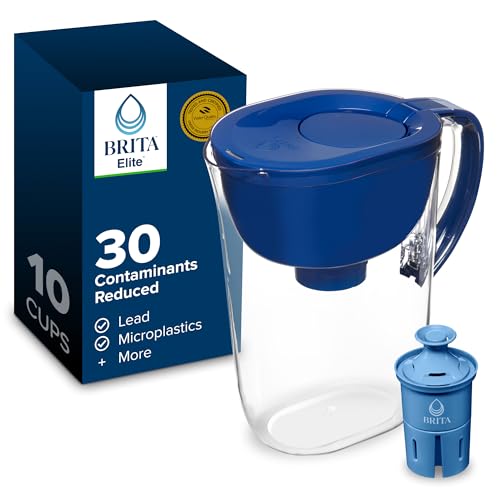
Brita Everyday Elite Pitcher — Best for easiest setup (pitcher)
A no-tools pitcher that’s easy to start with and uses Brita’s Elite filter.
Why it wins: One of the simplest ways to get verified certified reductions without installing anything.
Pros
-
Elite filter has WQA certification against NSF/ANSI 42, 53, and 401 (per performance data sheet).
-
Pitcher form factor fits most fridges; good for dorms/rentals.
-
Low commitment compared with plumbing installs.
Cons
-
Slower than faucet/under-sink systems when you need lots of water quickly.
-
Filter cost over time can add up for large households.
Trade-offs / who should skip
-
Skip if you fill big bottles daily or cook a lot (you’ll get annoyed by refill cycles).
-
Skip if you want RO-style “near-zero dissolved solids” water.
Scores: Performance 3/5 • Certified contaminant scope 4/5 • Ease of use 5/5 • Value 4/5
PUR PLUS Faucet-Mount (Vertical) — Best for renters (fast filtered water at the tap)
A faucet-mounted option that’s quick to install/remove and gives filtered water on demand.
Why it wins: Strong verified certification profile for a faucet-mount, plus instant convenience.

Pros
-
WQA-certified against NSF/ANSI 42, 53, and 401 (per manual / performance docs).
-
Fast access—no waiting for a pitcher to drip through.
-
Easy to remove when you move.
Cons
-
Won’t fit every faucet (especially many pull-down/pull-out styles).
-
Filter life is limited compared with under-sink systems.
Trade-offs / who should skip
-
Skip if you have a non-standard faucet head or very low clearance at the sink.
-
Skip if you hate countertop clutter at the faucet base.
Scores: Performance 3/5 • Certified contaminant scope 4/5 • Ease of use 4/5 • Value 4/5
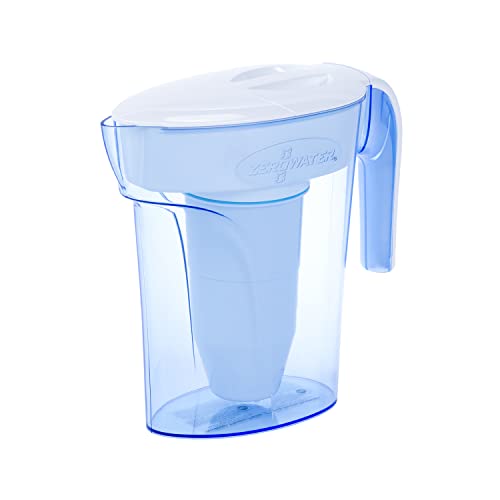
ZeroWater 7-Cup Pitcher — Best if you want very “low TDS” taste (and don’t mind more filter changes)
A pitcher that uses ion exchange aimed at stripping dissolved solids (including minerals).
Why it wins: Verified NSF certifications and the “clean slate” taste some people love—especially with hard water.
Pros
-
NSF certified to NSF/ANSI 42 and 53 (per product claims/docs).
-
Can noticeably reduce “hard water” taste (because it targets dissolved solids).
-
Includes a TDS meter in many kits (useful for monitoring).
Cons
-
Can remove minerals too—some people find the taste “flat.”
-
Filters can exhaust faster in high-TDS areas (more frequent replacements).
Trade-offs / who should skip
-
Skip if you specifically want to keep minerals in your water.
-
Skip if you don’t want to think about filter monitoring/replacement more often.
Scores: Performance 3/5 • Certified contaminant scope 3/5 • Ease of use 4/5 • Value 3/5
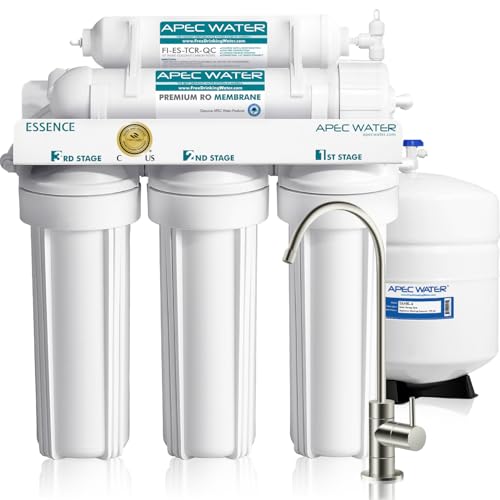
APEC ROES-50 — Best for “RO-style” filtration (under-sink reverse osmosis)
A classic under-sink reverse osmosis setup with a storage tank and dedicated faucet.
Why it wins: RO is the go-to format when you want broad reduction capability and don’t mind install complexity.
Pros
-
Reverse osmosis design with 5-stage system and rated output (commonly listed as 50 GPD).
-
APEC markets it as WQA certified.
-
Great choice if you dislike any residual taste/odor many carbon filters leave.
Cons
-
More install complexity (tank + drain line) than standard under-sink filters.
-
RO systems produce wastewater during filtration (normal for this type).
Trade-offs / who should skip
-
Skip if you can’t install plumbing connections or you’re in a strict rental.
-
Certification scope note: I saw “WQA certified” on the maker page, but I couldn’t verify the exact NSF/ANSI standard coverage from a primary certification listing in my quick pass, so I treated the detailed certification scope as not verified.
Scores: Performance 5/5 • Certified contaminant scope 2/5 • Ease of use 2/5 • Value 4/5
Quick compare
-
Want the best everyday “installed” solution? → Aquasana AQ-5200
-
Want the easiest start (no tools)? → Brita Everyday Elite Pitcher
-
Renters who want instant filtered water? → PUR PLUS Faucet-Mount
-
Hard water taste driving you nuts (and you’ll monitor filters)? → ZeroWater Pitcher
-
Want RO-style filtration and accept install + wastewater? → APEC ROES-50
FAQs
What’s the best water filter overall?
For most households, an under-sink system with strong verified certifications is the best balance of convenience, output, and trust—so I’d start with the Aquasana AQ-5200.
Is a faucet filter better than a pitcher?
If your faucet is compatible, a faucet filter is usually faster and more convenient. A pitcher is better if you want zero install and fridge storage.
Do I need reverse osmosis?
Only if you specifically want RO-style filtration and accept the trade-offs (install complexity and wastewater). For many people, a well-certified under-sink carbon system is plenty.
Did I check recalls?
I spot-checked official CPSC recall listings and only found an old Brita recall related to children’s water bottles (not pitcher/faucet/under-sink systems).
As an Amazon Associate, I earn from qualifying purchases.