
Best Smoke Detectors Today
As an Amazon Associate I earn from qualifying purchases.Some links may earn us a commission at no extra cost to you.
How I researched
I compared recent spec sheets/manual-style details and credible roundups, prioritized low-maintenance power (my main metric) and practical features that reduce nuisance alarms, checked interconnect and replacement fit (battery vs hardwired vs wireless), noted any “hard to find/older design” risk, and weighed performance against long-term ownership effort.
Top picks
First Alert SM310 — Best overall for most homes (dual-sensor + 10-year battery)
A simple upgrade for bedrooms, hallways, and main living areas: dual-sensor coverage (photoelectric + ionization) with a sealed 10-year battery.

- First Alert's Precision Detection advanced sensing technology complies with new industry standards to reduce cooking nuisance alarms and provides early warning in the event of a home fire emergency
- 10-Year sealed battery eliminates battery replacements and low battery chirps for the life of the alarm
- Dual sensors provide protection from fast flaming and slow smoldering fires

Pros
-
Dual-sensor approach for broader smoke signatures
-
Sealed 10-year battery = less maintenance
-
Straightforward install for most ceilings/walls
Cons
-
Not an interconnected system
-
If you want phone alerts, this isn’t it
Social proof: See reviews on Amazon.
Trade-offs / who should skip (failure cases): Skip if you need all alarms to sound together (interconnect) or you want app notifications.
Scores: Performance 4.5/5 · Maintenance interval 5/5 · Ease of use 4/5 · Value 4/5
First Alert PRC710 — Best slim smoke + CO combo (10-year battery)
If you want smoke and carbon monoxide protection in one device, this combo model keeps things simple and space-efficient.

- The front cover design of the alarm may vary but product function remains the same
- Complies with all current 10 year legislation in U. S. states/cities where required
- Features electrochemical Carbon Monoxide sensing technology and photoelectric smoke sensor optimized to detect larger smoke particles produced by smoldering fires; helps minimize the number of false alarms
Pros
-
Smoke + CO in one unit (fewer devices to mount)
-
Sealed 10-year battery reduces “battery day” chores
-
Slimmer look than many combo alarms
Cons
-
End-of-life usually means replacing the whole unit
-
Not ideal if you specifically need a hardwired replacement
Social proof: See reviews on Amazon.
Trade-offs / who should skip (failure cases): Skip if your home already has hardwired interconnected alarms and you want to keep that setup without adapters.
Scores: Performance 4/5 · Maintenance interval 5/5 · Ease of use 4/5 · Value 4/5
Kidde P4010ACSCO-WF — Best smart hardwired pick (phone alerts)
For hardwired homes where I want app notifications, this is a strong “modernize the system” option—as long as compatibility checks out.
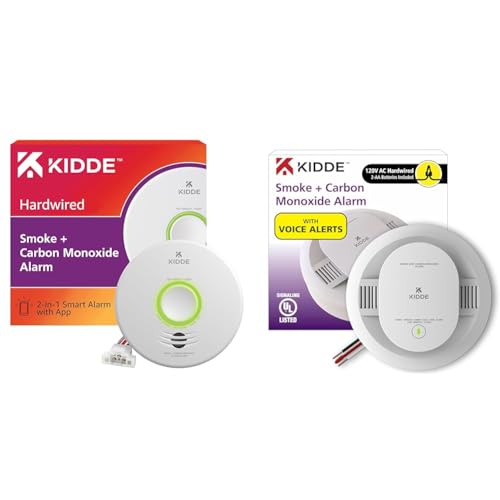
- Product 1: Voice Alarm announces the hazard type when detected: “Fire!” = smoke or fire, "Warning! Carbon Monoxide!" = CO, or "Replace Alarm" when the unit has come to its end of life span
- Product 1: Easy Installation: download the Kidde app & scan the QR code on the back of the smoke alarm
- Product 1: Compatible with Amazon Alexa, Google Home, iPhone, & Android smart devices
Pros
-
Hardwired power with battery backup
-
App alerts add peace of mind when away
-
Good fit if you’re already in a Kidde hardwired ecosystem
Cons
-
Compatibility matters with existing interconnected alarms
-
Smart features add setup friction (Wi-Fi/app/account)
Social proof: See reviews on Amazon.
Trade-offs / who should skip (failure cases): Skip if you have mixed brands on the same interconnect line, or you don’t want a smart-home setup.
Scores: Performance 4/5 · Maintenance interval 4/5 · Ease of use 3.5/5 · Value 3.5/5
First Alert SM500V — Best wireless interconnect (no rewiring)
If I want “when one alarms, they all alarm” without opening walls, wireless interconnect is the easiest path.

- First Alert's Precision Detection advanced sensing technology complies with new industry standards to reduce cooking nuisance alarms and provides early warning in the event of a home fire emergency
- Through early warning interconnect, when one alarm sounds, all compatible alarms will sound
- Voice and location alerts tell you the location of danger to help you escape safely
Pros
-
Wireless interconnect helps the whole home alert together
-
Great for retrofits where running wire isn’t realistic
-
Easy to expand room-by-room with compatible units
Cons
-
Still uses replaceable batteries (ongoing upkeep)
-
Range can vary by walls/floors; placement testing is a must
Social proof: See reviews on Amazon.
Trade-offs / who should skip (failure cases): Skip if you already have a solid hardwired interconnect network—or if your layout is tough for wireless signals.
Scores: Performance 4/5 · Maintenance interval 3/5 · Ease of use 4/5 · Value 4/5
First Alert / BRK 3120B — Best basic hardwired replacement (dual-sensor + battery backup)
A dependable “replace what I have” option for older hardwired installs: dual-sensor smoke detection with battery backup.

- Dual Photoelectric and Ionization sensing technologies for optimal sensing of smoke particles produced in both flaming and smoldering fires.
- Two Latching Features
- Two Silence Features
Pros
-
Hardwired with battery backup for outages
-
Dual-sensor smoke detection
-
Good choice when swapping older ceiling-wired alarms
Cons
-
Older design compared with newer-generation models
-
Not smart, and no wireless interconnect features
Social proof: See reviews on Amazon.
Trade-offs / who should skip (failure cases): Skip if you want app alerts or you’re trying to minimize battery maintenance as much as possible.
Scores: Performance 4/5 · Maintenance interval 3/5 · Ease of use 3.5/5 · Value 4/5
Quick compare
-
Best overall, least maintenance: First Alert SM310
-
Best smoke + CO combo: First Alert PRC710
-
Best smart hardwired: Kidde P4010ACSCO-WF
-
Best whole-home alerting without rewiring: First Alert SM500V
-
Best straightforward hardwired replacement: First Alert/BRK 3120B
FAQs
Which is better: 10-year battery or hardwired?
If I don’t already have ceiling wiring, I lean 10-year sealed battery for simplicity. If I’m replacing existing wired alarms, hardwired + battery backup keeps the system consistent.
Should I buy smoke-only or smoke + CO?
If you have fuel-burning appliances, an attached garage, or you want extra coverage, smoke + CO is a practical upgrade—just follow placement rules in the manual to avoid nuisance alarms.
Do I need interconnected alarms?
If you sleep with doors closed, have multiple floors, or want the best chance of hearing the alarm anywhere, interconnect is a big upgrade. Wireless interconnect is the easiest retrofit option.
How many smoke alarms do I need?
A common baseline is: each bedroom, outside sleeping areas, and every level. Then add more for long hallways or large floors.
As an Amazon Associate, I earn from qualifying purchases.