
Best Portable Solar Powered Generators
This post contains affiliate links. If you purchase them, we may earn a commission at no additional cost to you.
How I researched
I compared official spec sheets, warranty pages, and recent hands-on reviews across leading brands to verify battery chemistry, usable Wh, inverter wattage, solar input, cycle life, and warranty length. I favored models using LiFePO₄ (LFP) for longevity and looked at real-world recharge speeds and user feedback for noise and reliability.
Top picks
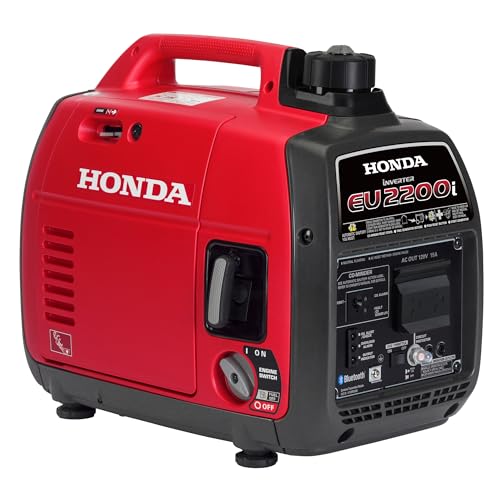
1. Honda 664240 EU2200i 2200 Watt Portable Inverter Generator with Co-Minder — Best petrol backup
I added the Honda EU2200i as the reliable petrol fallback for anyone who wants a proven gas option alongside solar and battery choices. It’s an inverter-based 2,200W portable generator that’s popular for its reliable performance and easy servicing—great when sun or grid power aren’t available.
Pros
-
2,200W inverter output suitable for many home backup loads
-
Inverter design provides clean power for sensitive electronics
-
Well-known reliability and dealer/service network for parts and maintenance
-
Includes Co-Minder safety feature for added user protection
Cons
-
Runs on petrol—requires regular fuel, oil changes, and maintenance
-
Noisy compared with battery/solar options and produces exhaust (outdoor use only)
-
Not a renewable solution — ongoing fuel cost and storage considerations
Trade-offs / Who should skip
-
Skip if you want a zero-emission backup or a truly silent solution—stick with larger battery+solar systems for longer outages. Choose Honda if you prioritize proven mechanical reliability and long-run refueling flexibility.
2. EcoFlow DELTA 2 Max — Best for most people
A powerful, future-proof 2kWh-class station with high inverter headroom and fast charging — great for multi-day outages and heavier appliances.

Pros
-
Large usable capacity in the ~2 kWh class
-
High AC output and surge capacity for demanding loads
-
Fast AC + strong solar charging; expandable with extra batteries
Cons
-
Heavier and pricier than 1kWh units
-
App-centric features might be unnecessary for simple users
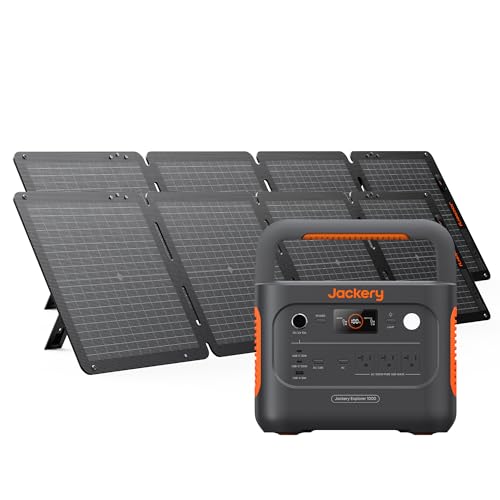
3. Jackery Explorer 1000 Plus — Best for camping & easy home backup
Balanced capacity and inverter power that works well for RVs, camping, and short home outages. Reliable ecosystem if you want matching solar panels and accessories.
Pros
-
Solid ~1.2–1.3 kWh usable capacity with strong inverter output
-
Long cycle life and extended warranty options
-
Works well with bundled solar kits
Cons
-
Heavier than the smallest portable models
-
Best performance when paired with the brand’s own solar accessories
Who should skip -
If you want the absolute fastest wall recharge, consider the fastest-charging 1kWh models; if you need ultralight, look to smaller units.
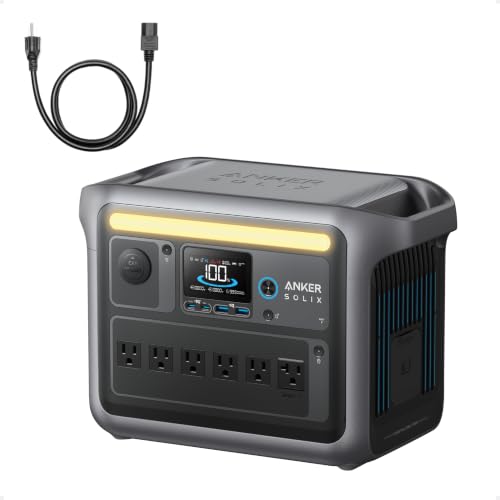
4. Anker SOLIX C1000 — Best for fastest wall charging
Compact 1kWh-class station engineered to recharge extremely quickly from AC while still offering solid solar input and long LFP life. Great when you need rapid top-ups between uses.
Pros
-
Very fast AC recharge times for its capacity
-
Good solar input for daytime top-ups
-
Long battery cycle life and strong warranty coverage
Cons
-
1kWh capacity limits multi-day heavy use
-
Fans can be noticeable under high load in very quiet environments
Who should skip -
Skip if you need multi-day runtime or to run high-wattage appliances for long periods.
5. BLUETTI AC180 — Best value 1kWh+
Offers a roomy ~1.1 kWh of LFP capacity, an ample inverter, and a competitive warranty—often a good value-for-feature balance for RV and cabin use.


Pros
-
Healthy usable capacity in the ~1.1 kWh range
-
Strong inverter for its class and reasonable solar input
-
Competitive warranty and expected cycle life for LFP packs
Cons
-
Noticeably heavier than ultra-portables
-
Solar input is solid but not class-leading
Who should skip -
If you want the fastest recharge or the lightest carry weight, consider other 1kWh-class options.
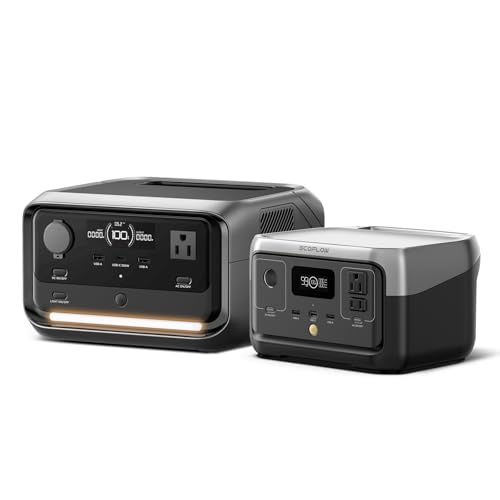
6. EcoFlow RIVER 2 Pro — Best lightweight & travel-friendly
A true grab-and-go unit that’s easy to carry for weekend adventures while still offering LFP durability and respectable charging speeds. Ideal for CPAP, cameras, laptops, and small fridges.
Pros
-
Light and easy to transport for day trips and short camping runs
-
LFP chemistry for long cycle life and safety
-
Fast-ish AC recharge for a compact unit
Cons
-
Lower solar input compared with larger models — slower daytime recovery
-
Not suitable for large, continuous high-wattage appliances
Who should skip -
Skip if you routinely run space heaters, microwaves, or other heavy loads — step up to a 1–2 kWh station.
Buying guide
-
Match capacity to the job: ~700–800Wh for day trips/CPAP/phones/laptops; ~1–1.3kWh for camping + medium use; ~2kWh+ for multi-day outages and heavier appliances.
-
Battery chemistry: Favor LiFePO₄ (LFP) for longevity and safety — LFP typically offers thousands of cycles compared with several hundred for older chemistries.
-
Inverter wattage: Size your inverter to handle the largest device you’ll run (coffee makers, microwaves, and hair dryers need high surge and continuous wattage).
-
Solar input & MPPT: More solar watts = faster daytime refills. Look for MPPT controllers and ensure panel wattage can approach the station’s max solar input.
-
Recharge speed: If you top up between uses, fast AC recharge or combined AC+solar boosting can be decisive.
-
Warranty & support: Look for multi-year warranties (3–5 years) and easy warranty registration/claims process.
FAQs
Q: Do these come with solar panels?
A: Often sold as separate panels or in kit bundles—check the specific Amazon listing for what’s included.
Q: Can they run a full-size fridge?
A: Yes, many 1–2 kWh units with 1,500–2,400W inverters can run a fridge for hours; actual runtime depends on the fridge’s draw and duty cycle.
Q: LFP vs NMC—what’s the practical difference?
A: LFP focuses on longevity and safety (thousands of cycles), while NMC can offer higher energy density but fewer cycles.
Q: How many solar panels do I need?
A: Aim to match the station’s max solar input (e.g., 500–1,000W for larger units). More panel wattage speeds charging given good sun.
Q: Can I take these on a plane?
A: No. Most airlines restrict batteries above 160Wh; these power stations exceed that limit and are not permitted in checked or carry-on baggage.
As an Amazon Associate, I earn from qualifying purchases.