
Best Infant Noise Reduction Headphones
As an Amazon Associate, I earn from qualifying purchases. Some links may earn us a commission at no extra cost to you.
Infant hearing protection should reduce noise without creating excessive pressure on a baby’s head. A secure seal around both ears, soft cushions, appropriate sizing, and a comfortable headband are just as important as the advertised noise-reduction rating.
Protective earmuffs reduce sound rather than creating complete silence. They should be used as an extra layer of protection, not as a reason to keep a baby close to speakers, fireworks, engines, or other intense noise sources.
Top Picks
Baby Banz Earmuffs — Best Overall Infant Earmuffs
Baby Banz is a well-established infant hearing-protection option designed for babies and young toddlers.
The padded adjustable band and cushioned ear cups provide passive noise reduction without batteries or electronics. The design works well for travel, sporting events, parades, fireworks viewed from a safe distance, and other noisy outings.
Why it wins: It combines infant-focused sizing, simple passive protection, and an adjustable design that can continue fitting as a baby grows.

Pros
- Designed for babies and young toddlers
- Passive protection requires no batteries
- Soft padded band
- Cushioned ear cups
- Lightweight enough for travel
Cons
- Ear cups can look bulky on very small babies
- Cushions may become warm during longer outings
Trade-offs / Who should skip: Parents specifically looking for a softer fabric-style band may prefer the Alpine or LYSIAN options.
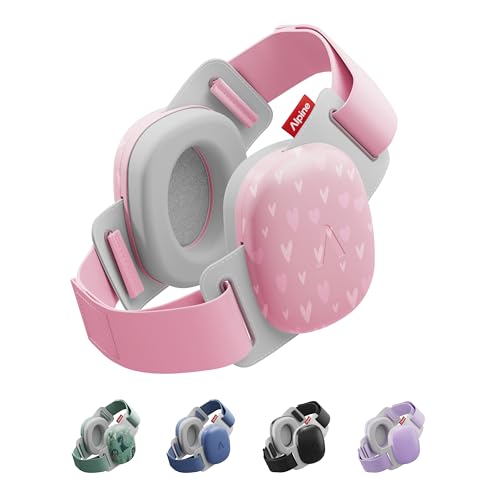
Alpine Muffy Baby Comfort — Best Soft-Band Comfort
The Alpine Muffy Baby Comfort is designed for babies and toddlers from 3 to 48 months.
Instead of relying on a rigid overhead frame, it uses a softer adjustable headband that can be more comfortable for younger babies. It is suitable for flights, family events, outdoor gatherings, and other noisy environments where fit and comfort matter.
Why it wins: The soft-band design reduces rigid pressure across the top of the head while still holding the ear cups in position.
Pros
- Made for babies and toddlers
- Soft adjustable headband
- Avoids a rigid overhead frame
- Compact for travel
- CE and ANSI certified
Cons
- Headband requires careful adjustment
- Proper protection depends on maintaining a complete seal
Trade-offs / Who should skip: Parents who prefer a more conventional adjustable earmuff may find Baby Banz or Mumba simpler to put on quickly.
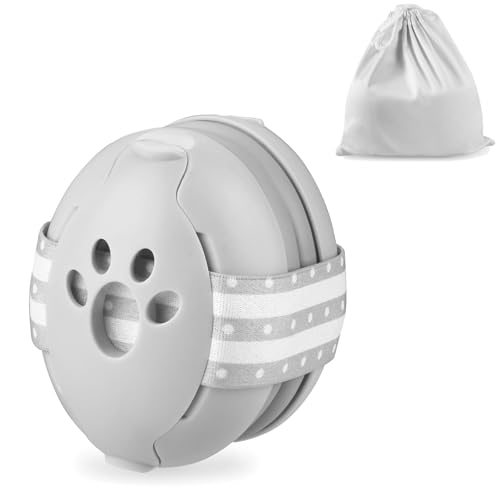
PandaEar Baby Ear Protection — Best Budget Infant Option
PandaEar offers a lower-cost option designed specifically for babies and toddlers.
Its adjustable fabric band helps distribute pressure around the head while the cushioned cups cover the ears. The compact design makes it convenient for flights, celebrations, sporting events, and occasional noisy outings.
Why it wins: It gives parents an infant-focused soft-band option without moving into the higher-priced models.
Pros
- Designed for babies and toddlers
- Soft adjustable fabric headband
- Lightweight
- Compact for travel
- Budget-friendly
Cons
- Fit has a major effect on protection
- Materials may feel less premium than higher-priced models
Trade-offs / Who should skip: Families expecting frequent use may prefer a more established or more substantial model such as Baby Banz, Alpine, or Mumba.
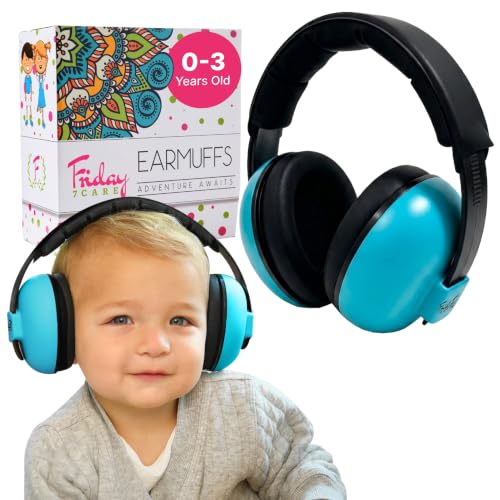
Friday 7Care Baby Headphones — Best for Babies Under Two
Friday 7Care Baby Headphones are designed around infant use and are suitable for babies from 0 to 24 months.
They use an adjustable headband and soft ear cups for travel, parades, sporting events, and other noisy environments.
Why it wins: The 0-to-24-month focus makes this one of the clearest choices in the lineup for parents shopping specifically for younger infants.
Pros
- Designed for babies from 0 to 24 months
- Adjustable infant-focused headband
- Lightweight
- Travel-friendly
- Useful for flights and public events
Cons
- Shorter age range than several alternatives
- Fit should be checked as the baby moves
Trade-offs / Who should skip: Parents wanting one pair that can remain useful farther into the toddler years should consider Alpine or LYSIAN.
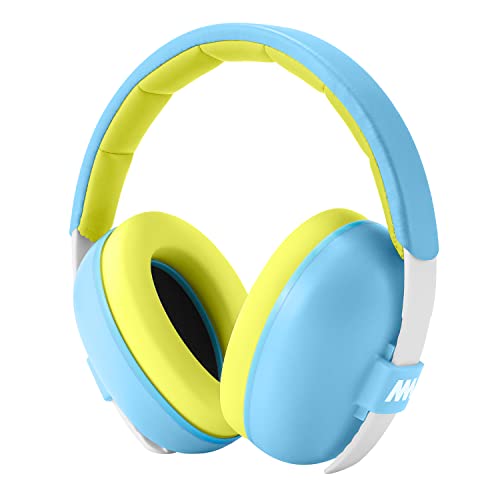
Mumba Baby Earmuffs — Best Straightforward 3–24+ Month Pick
Mumba Baby Earmuffs are made specifically for babies and toddlers, with the supplied listing positioning them for ages 3 to 24+ months.
They are a straightforward choice for parents who want dedicated baby hearing protection without moving to a general kids earmuff.
Why it wins: The infant-specific 3–24+ month range and strong customer history make it an easy alternative for parents who want a conventional baby earmuff.
Pros
- Intended for babies and toddlers
- Listed for ages 3–24+ months
- Dedicated infant hearing-protection design
- Suitable for travel and noisy outings
- Substantial customer review history
Cons
- Not listed for newborns under three months
- Shorter age range than options extending to three or four years
Trade-offs / Who should skip: For newborn use, consider a model explicitly covering younger ages. For a pair designed to fit farther into toddlerhood, Alpine or LYSIAN offers a broader stated age range.
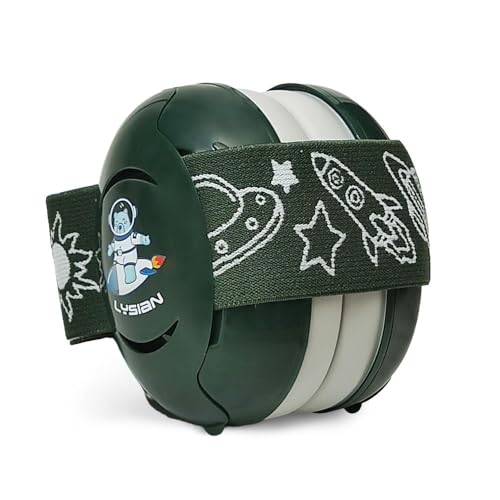
LYSIAN Baby Ear Protection — Best Elastic-Band Option for Growing Babies
The LYSIAN earmuffs are designed for infants and toddlers from 3 months to 3 years.
The supplied listing specifies a 25 dB SNR and an elastic band intended to stay positioned during activities such as flights, parades, festivals, and naps. It is listed for head sizes from 42 to 52 cm.
Why it wins: It combines a clearly specified infant/toddler age range with an elastic-band design and a stated 25 dB SNR.
Pros
- Designed for ages 3 months to 3 years
- 25 dB SNR listed
- Elastic headband
- Listed for 42–52 cm head sizes
- Suitable for travel and noisy events
Cons
- Not intended for babies under three months
- Elastic-band positioning should be checked regularly
Trade-offs / Who should skip: Parents wanting a traditional rigid or padded adjustable headband may prefer Baby Banz or Mumba instead.
PROHEAR 032 Kids Earmuffs — Best for Older Siblings
The PROHEAR 032 is better suited to older children rather than infants.
It uses a conventional adjustable padded headband and a foldable design. That makes it useful when a family shopping for infant hearing protection also needs a separate pair for an older sibling.
Why it wins: It adds an older-child option without pretending that a standard kids earmuff is appropriate for a newborn.

Pros
- Designed for older children
- Adjustable padded headband
- Foldable for travel
- Useful for fireworks, school, events, and other loud environments
Cons
- Not designed for infants
- Rigid headband is not appropriate for newborn sizing
Trade-offs / Who should skip: Do not choose this as the baby’s earmuff. It belongs here for families who need separate protection for an older child alongside an infant-specific pair.
Quick Compare
- Baby Banz Earmuffs: best overall infant earmuff.
- Alpine Muffy Baby Comfort: best soft-band comfort option.
- PandaEar Baby Ear Protection: best budget infant option.
- Friday 7Care Baby Headphones: best for babies under two.
- Mumba Baby Earmuffs: best straightforward 3–24+ month option.
- LYSIAN Baby Ear Protection: best elastic-band option for growing babies.
- PROHEAR 032: best separate option for an older sibling.
Final Verdict
The Baby Banz Earmuffs are a strong all-around choice for parents who want a straightforward infant-sized hearing-protection option, while the Alpine Muffy Baby Comfort is better suited to parents prioritizing a softer headband design.
The Mumba Baby Earmuffs are a practical choice for babies and toddlers from 3 to 24+ months, while the LYSIAN Baby Ear Protection extends its stated fit to age three and adds a 25 dB SNR elastic-band design.
For a lower-cost option, PandaEar is worth considering, while Friday 7Care specifically covers babies from birth through the younger toddler stage. The PROHEAR 032 should remain an older-child option rather than an infant earmuff.
As an Amazon Associate, I earn from qualifying purchases.