
Best Baby Car Seat — 5 Seats I Trust for My Own Kids
As an Amazon Associate, I earn from qualifying purchases. Some links may earn us a commission at no extra cost to you.
Choosing a car seat depends on your child’s current size and developmental stage, your vehicle, and how you expect to use the seat. An infant carrier can be convenient during the newborn stage, while convertible and all-stage seats stay installed longer. Older children may eventually move into an appropriate belt-positioning booster.
Always follow the car-seat manufacturer’s current height, weight, installation, and usage requirements, and confirm that the seat fits both your child and vehicle correctly.
Top Picks
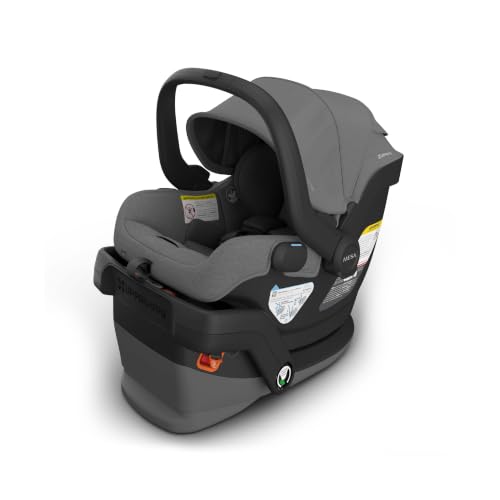
UPPAbaby Mesa V3 Infant Car Seat — Best for a premium infant-seat setup
The UPPAbaby Mesa V3 is the premium infant option for parents who want a dedicated carrier with a base and an adjustable fit.
This campaign version is listed for infants from 4 to 30 pounds and includes the base and infant insert. It also uses a no-rethread harness and provides 25 headrest positions, which can make adjustments more convenient as a baby grows within the seat’s stated limits.
Why it wins: Its included base, no-rethread harness, and extensive headrest adjustment make it the most feature-rich dedicated infant seat in this lineup.

Pros
- Listed for infants from 4–30 pounds
- Base included
- No-rethread harness
- 25 headrest positions
- Strong customer rating
Cons
- Premium price
- Infant-only format will eventually be outgrown
Trade-offs / Who should skip: Parents who want a lower-cost infant carrier should consider the Baby Trend EZ-Lift Plus. If you prefer one seat designed to remain installed through several stages, a convertible model may make more sense.
Baby Trend EZ-Lift Plus Infant Car Seat — Best for a budget infant carrier
The Baby Trend EZ-Lift Plus fills the more affordable infant-seat role.
Its listing emphasizes a lightweight carry build, newborn comfort padding, and an adjustable harness system. That makes it a straightforward choice for parents who specifically want a removable infant carrier without moving into premium pricing.
Why it wins: It provides a dedicated infant-carrier format from an established baby-gear brand at a substantially more accessible price than premium infant seats.

Pros
- Lightweight carry design
- Newborn comfort padding
- Adjustable harness system
- Established review history
- Lower-cost infant-seat option
Cons
- Fewer premium adjustment features than the Mesa V3
- Will be outgrown sooner than a convertible seat
Trade-offs / Who should skip: Families who want one seat to cover multiple stages should look at the Baby Trend Cover Me, Diono Radian 3R, or Evenflo Revolve360 Slim instead.
Evenflo Revolve360 Slim 2-in-1 — Best for rotating convenience
The Evenflo Revolve360 Slim is designed for parents who want easier access when getting a child into or out of the seat.
It supports rear-facing and forward-facing modes and is listed for children from 4 to 65 pounds. Its rotating format can be particularly appealing in day-to-day use, while the Slim positioning is intended to take up less lateral space than wider rotating seats.
The listing also includes a Quick Clean cover.
Why it wins: Rotation adds a convenience advantage that conventional fixed convertible seats do not provide.

Pros
- Rotating seat design
- Rear-facing and forward-facing modes
- Listed 4–65 pound range
- Slim-format positioning
- Quick Clean cover
Cons
- Considerably more expensive than basic convertible seats
- Not a removable infant carrier
Trade-offs / Who should skip: If rotation is not important, the Diono Radian 3R or retained Baby Trend Cover Me can provide multi-stage use without making rotation the central feature.
Diono Radian 3R 3-in-1 — Best for slim 3-across setups
The Diono Radian 3R is the strongest fit for families concerned about fitting multiple child seats across the back row.
Its listing specifically emphasizes a slim design intended for three-across arrangements in compatible vehicles. It supports rear-facing and forward-facing configurations and is positioned as a 3-in-1 seat for extended use.
Its substantial customer-review history is another advantage compared with many newer campaign listings.
Why it wins: The narrow, three-across-focused design gives it a very specific advantage for families managing limited back-seat width.

Pros
- Slim design
- Intended for compatible three-across setups
- 3-in-1 configuration
- Rear-facing and forward-facing use
- Large customer-review history
Cons
- Vehicle fit still needs to be checked carefully
- Less portable than an infant carrier
Trade-offs / Who should skip: If you do not need to fit several seats across one row, another convertible may offer features that matter more to you, such as rotation or a built-in canopy.
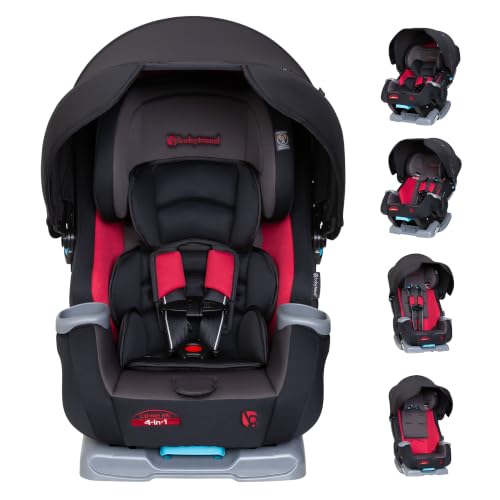
Baby Trend Cover Me 4-in-1 Convertible Car Seat — Best for built-in canopy coverage
The Baby Trend Cover Me remains in the roundup because its integrated canopy gives it a role the other convertible seats do not duplicate.
Its four modes cover rear-facing infant, rear-facing toddler, forward-facing toddler, and a later-stage configuration. It also includes a height- and angle-adjustable canopy plus multiple recline positions.
Why it wins: The adjustable built-in canopy distinguishes it from most conventional multi-stage car seats.
Pros
- Four-stage design
- Rear-facing and forward-facing configurations
- Built-in adjustable canopy
- Multiple recline positions
Cons
- Convertible design is not meant to function as a removable infant carrier
- Canopy may not be important to every family
Trade-offs / Who should skip: Parents prioritizing rotation should choose the Evenflo, while families specifically trying to fit multiple seats across a row should compare the Diono.
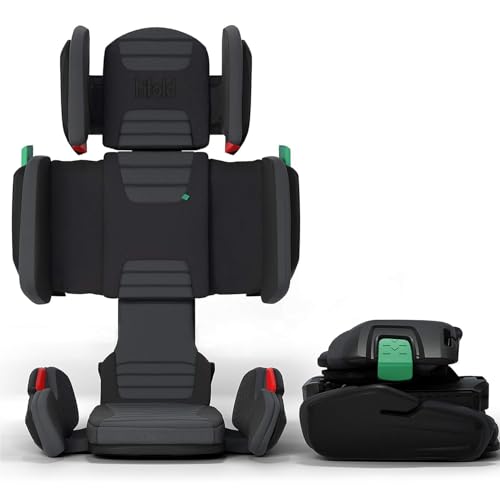
mifold Hifold Adjustable High Back Booster — Best for a compact high-back booster
The mifold Hifold is the older-child option for families who still want high-back support but also value a more travel-oriented design.
Unlike the infant and convertible seats above, this is a dedicated high-back booster. Its adjustable format makes it better suited to older children who have reached the appropriate booster stage according to the manufacturer’s requirements.
It also has more than 2,000 customer reviews in the campaign listing.
Why it wins: It fills the high-back booster role without duplicating the infant and convertible seats elsewhere in the roundup.
Pros
- Dedicated high-back booster
- Adjustable design
- Travel-oriented format
- Established customer-review history
- Distinct option for older children
Cons
- Not appropriate for infants or younger children who still need a harnessed seat
- More expensive than basic backless boosters
Trade-offs / Who should skip: Families needing a harnessed seat should choose an age- and size-appropriate infant or convertible model. For an even more portable booster option, consider BubbleBum.
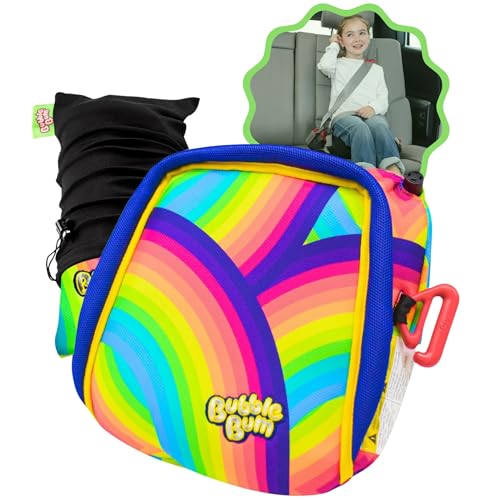
BubbleBum Inflatable Travel Booster — Best for rideshares and portable travel
BubbleBum is the most travel-focused option in this roundup.
The inflatable backless booster is listed for children from 40 to 110 pounds and ages 4 to 11, subject to the manufacturer’s fit and usage requirements. Its narrow design is intended to work in three-across arrangements and is positioned specifically for rideshares, carpools, and portable use.
With more than 6,800 reviews in this campaign listing, it also has a substantial owner-feedback history.
Why it wins: Its inflatable, narrow, lightweight format is much easier to transport than a conventional full-size car seat or high-back booster.
Pros
- Inflatable portable design
- Listed for 40–110 pounds
- Narrow three-across-friendly format
- Useful for rideshares and carpools
- Large customer-review history
Cons
- Backless design provides less structure than a high-back booster
- Only appropriate once a child meets the manufacturer’s booster requirements
Trade-offs / Who should skip: For regular everyday vehicle use where portability is less important, the mifold high-back booster may be a more conventional choice for an appropriately sized older child.
Quick Compare
- UPPAbaby Mesa V3: best premium dedicated infant seat.
- Baby Trend EZ-Lift Plus: best lower-cost infant carrier.
- Evenflo Revolve360 Slim: best for rotating convenience.
- Diono Radian 3R: best for slim and potential three-across installations.
- Baby Trend Cover Me 4-in-1: best multi-stage option with built-in canopy coverage.
- mifold Hifold: best compact high-back booster for older children.
- BubbleBum: best portable booster for rideshares, carpools, and travel.
Final Verdict
For the newborn stage, the UPPAbaby Mesa V3 is the more feature-rich infant carrier, while the Baby Trend EZ-Lift Plus offers a simpler lower-cost alternative.
Families who want a seat that remains installed longer have several distinct options. The Evenflo Revolve360 Slim prioritizes rotating convenience, the Diono Radian 3R is aimed at slimmer multi-seat arrangements, and the retained Baby Trend Cover Me 4-in-1 adds an adjustable canopy to its multi-stage design.
For older children who have reached the appropriate booster stage, the mifold Hifold provides a high-back format, while the BubbleBum prioritizes portability for travel, rideshares, and carpools.
Whichever model you choose, use the manufacturer’s current instructions and limits rather than age alone to determine when a child is ready for a particular seat or booster mode.
As an Amazon Associate, I earn from qualifying purchases.