
Best snow socks for tires
As an Amazon Associate I earn from qualifying purchases. Some links may earn us a commission at no extra cost to you.
Snow socks (textile “chains”) are all about getting traction fast when you’re caught in snow/ice—especially on vehicles where metal chains are a pain or wheel-well clearance is tight. The #1 thing that makes or breaks them is clearance friendliness (how low-profile they are) plus getting the exact right size for your tire code.
Top picks
AutoSock HP 697 — Best for low-clearance cars & “chain-control backup”
A premium, low-profile textile traction device that’s designed as a snow-chain alternative and is built around quick install + self-centering. Why it wins: AutoSock emphasizes low-clearance fit and lists its HP line as certified to EN16662-1:2020 on the product page.

Pros
-
Very low-profile concept (marketed for tight clearance).
-
HP line notes EN16662-1:2020 certification (on product page).
-
AutoSock provides a dedicated tire-size finder for matching.
Cons
-
Size-specific; wrong size = wasted purchase
-
Not meant for long, dry-road driving (wears faster)
Social proof: See reviews on Amazon.
Trade-offs / who should skip: Skip if you need maximum bite for deep, unplowed roads—metal chains usually win there. Also skip if you won’t take 30 seconds to match your tire code in a size finder (fit matters more than brand).
Scores: Performance 4/5 • Clearance friendliness 5/5 • Ease of use 4/5 • Value 3/5
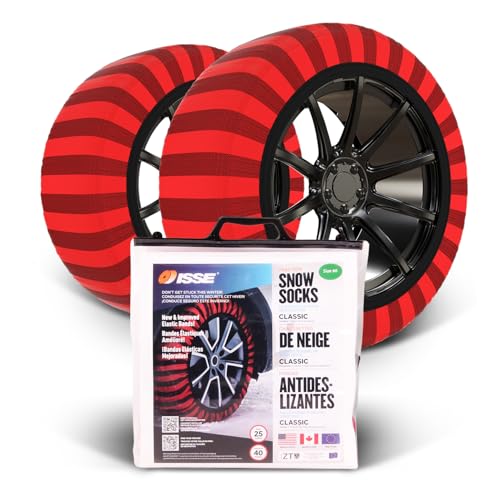
ISSE Classic (Size 74) — Best “keep it in the trunk” emergency set
A straightforward textile sock option that’s aimed at normal/occasional use and quick installs. Why it wins: it’s a simple, mainstream size variant on Amazon, and ISSE positions its textile socks as an alternative traction device with published standards/approvals claims (brand-level).

Pros
-
Compact, lightweight emergency traction concept
-
Brand lists multiple standards/approvals (verify locally).
-
Amazon listing shows a 2-year guarantee claim for this line.
Cons
-
Size-specific; you must match the fit chart
-
Expect faster wear if you drive it on bare pavement
Social proof: See reviews on Amazon.
Trade-offs / who should skip: Skip if your route regularly includes steep grades + packed ice—consider chains or true winter tires. Also skip if your vehicle’s manual requires a specific chain class and you can’t confirm acceptance where you drive.
Scores: Performance 3/5 • Clearance friendliness 4/5 • Ease of use 4/5 • Value 4/5
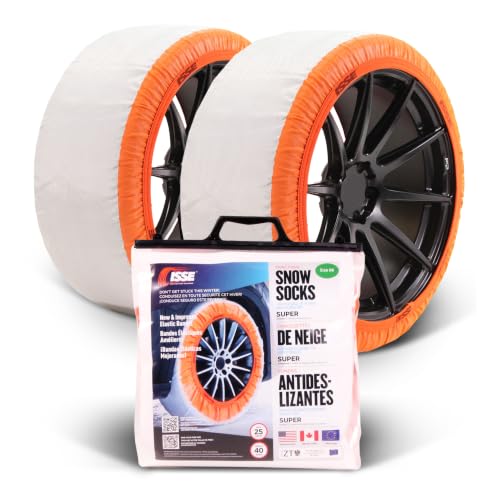
ISSE Super (Size 70) — Best for more frequent winter use
If you want a tougher textile option (more “planned winter tool” than “just in case”), ISSE’s Super line is positioned for heavier/longer use. Why it wins: ISSE describes Super as suitable for intensive use and cites longer-lifespan expectations versus Classic (manufacturer claim).
Pros
-
Positioned for more intensive/frequent use (vs. basic socks).
-
Manufacturer-stated max speed guidance exists (follow it).
-
Compact storage compared with most chain kits
Cons
-
Amazon page availability can vary by size
-
Still not ideal for sustained bare-road driving
Social proof: See reviews on Amazon.
Trade-offs / who should skip: Skip if you only need something once every few years—Classic-style options are usually enough. Also skip if your main issue is ground clearance and you can’t confirm your exact chain class requirement.
Scores: Performance 4/5 • Clearance friendliness 4/5 • Ease of use 4/5 • Value 3/5
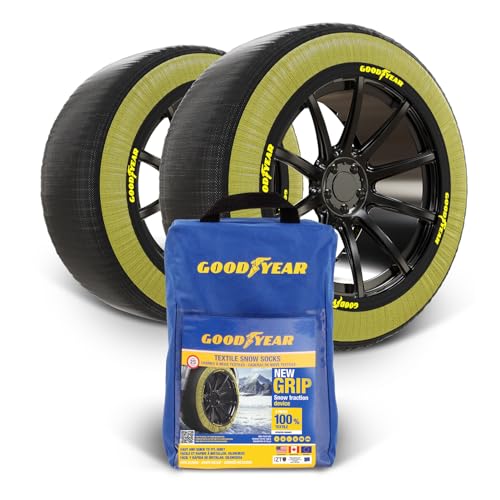
Goodyear Grip — Best budget-friendly “name brand” textile sock
This is a Goodyear-branded textile traction option that’s positioned for easy installation and multi-season reuse. Why it wins: it carries a clear “2-year guarantee” claim on the Amazon product page, and it’s marketed as low-profile/no-metal.
Pros
-
2-year guarantee claim on listing.
-
No-metal, low-profile concept (per listing)
-
Easy-install positioning (per listing)
Cons
-
I couldn’t verify a numeric clearance spec (mm)
-
Must match the sizing chart exactly
Social proof: See reviews on Amazon.
Trade-offs / who should skip: Skip if you need documented clearance numbers for a very tight wheel well—look for a product that publishes clearance/thickness specs you can confirm.
Scores: Performance 3/5 • Clearance friendliness 3/5 • Ease of use 4/5 • Value 4/5
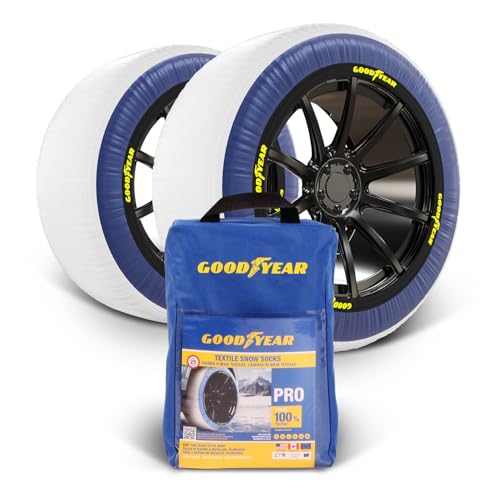
Goodyear Pro — Best for heavier-duty textile traction (more robust kit)
The “Pro” variant is positioned as the more durable option in the Goodyear textile lineup. Why it wins: the Amazon page lists a 2-year manufacturer warranty and markets it for passenger cars, trucks, and 4x4s.
Pros
-
2-year manufacturer warranty listed.
-
Marketed as higher-durability than basic options
-
No-metal design positioning
Cons
-
I couldn’t verify a numeric clearance spec (mm)
-
Still a traction aid, not a snow-tire replacement
Social proof: See reviews on Amazon.
Trade-offs / who should skip: Skip if you want the absolute most aggressive traction on ice—chains are usually the tool for that job.
Scores: Performance 4/5 • Clearance friendliness 3/5 • Ease of use 4/5 • Value 3/5
Quick compare
-
Tight wheel-well clearance: AutoSock HP-series style low-profile design
-
Best “just in case” trunk kit: ISSE Classic (choose the exact size)
-
More frequent winter use: ISSE Super line positioning
-
Want a clear warranty claim on-page: Goodyear Grip/Pro listings
FAQs
Are snow socks legal where chains are required?
Sometimes, but it’s not universal. I recommend checking the specific state/province DOT guidance for chain-control areas you’ll drive through. Some brands list certain certifications/approvals, but I still treat “legal everywhere” as something I couldn’t verify.
How fast can I drive with snow socks?
Follow the manufacturer’s limit. AutoSock’s US FAQ describes passenger-vehicle use similar to conventional chain speed limits.
Can I drive on dry pavement with them?
I wouldn’t plan to—textile traction devices generally wear faster on bare pavement. Use them to get through the snowy/icy segment, then remove when conditions allow.
Do snow socks work on ABS/traction control cars?
Many manufacturers market them as compatible with modern electronic safety systems, but you should follow your vehicle manual and the sock manufacturer’s instructions. (For AutoSock, system-compatibility is mentioned on the product page.)
As an Amazon Associate, I earn from qualifying purchases.